What do your lab tests say about your hair loss?

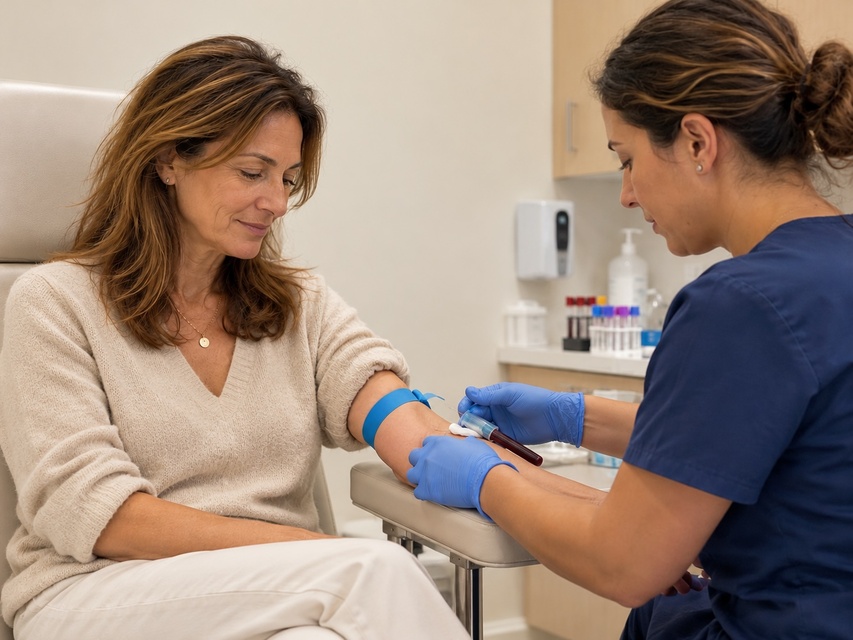
Quick Answer: Which lab tests matter for hair loss?
- Losing 50–100 hairs a day is normal, but noticeably more shedding or a widening part is a signal worth checking with a few simple blood tests.
- The core hair-loss panel is a complete blood count (CBC), ferritin (iron stores), TSH (thyroid), vitamin D, vitamin B12 and zinc. Hormone tests are added when there are signs of androgen excess.
- Ferritin is the single most useful nutrition marker for shedding. Many hair specialists aim for a ferritin of at least 40 ng/mL, well above the lab's "normal" cutoff.
- A normal CBC does not rule out iron deficiency. Iron stores fall before hemoglobin does, so ferritin must be checked separately.
- Stop biotin supplements 2–3 days before your blood draw, because high-dose biotin can distort thyroid and hormone results.
Why do blood tests matter for hair loss?
This section explains what blood tests can and cannot tell you about your hair.
Blood tests help find the hidden, correctable drivers of hair loss, such as low iron, an underactive thyroid or a vitamin deficiency. Your hair follicles are some of the fastest-dividing cells in your body, so they are among the first to slow down when your body is short on raw materials or under hormonal stress. Fixing these factors gives every hair treatment you use a better foundation to work from.
It is also important to know what blood tests do not do. Most people with androgenetic alopecia (genetic, pattern hair loss) have completely normal lab results, because the process happens at the level of the follicle itself [3]. A normal panel is good news: it means your hair can respond fully to targeted topical and nutritional care.
Blood tests are especially valuable for women, for anyone with sudden diffuse shedding (telogen effluvium), and for people who have recently lost weight quickly, including on GLP-1 medications. In these groups, an abnormal result is found often enough that testing is part of a standard dermatology workup [3][11].
What does a CBC show about hair loss?
The complete blood count is the starting point of every hair-loss panel.
A complete blood count (CBC) measures your red blood cells, white blood cells and platelets. For hair, its main job is to detect anemia, a shortage of hemoglobin that reduces the oxygen delivered to tissues, including the hair bulb. The World Health Organization defines anemia as hemoglobin below 12 g/dL in non-pregnant women and below 13 g/dL in men [12].
Which CBC values should you look at?
- Hemoglobin (Hb) and hematocrit: low values confirm anemia, one of the classic triggers of diffuse shedding.
- MCV (mean corpuscular volume): small red cells (low MCV) point toward iron deficiency; large red cells (high MCV) suggest low vitamin B12 or folate.
- MCH and RDW: a low MCH and a high RDW (red cell distribution width) are early clues of developing iron deficiency, sometimes before hemoglobin drops.
- White blood cells and platelets: unusual values are not hair-specific, but they can reveal infection, inflammation or other conditions your doctor should follow up.
Here is the key point most people miss: your CBC can be perfectly normal while your iron stores are already low. The body protects hemoglobin first and drains its reserves second, so iron deficiency without anemia is common, especially in women who menstruate. That is why the CBC should always be paired with ferritin.
How do iron and ferritin affect your hair?
Iron is the nutrient most consistently linked to shedding, especially in women.
Low iron stores are strongly associated with increased hair shedding. In a landmark study, women with hair loss had significantly lower serum ferritin than women without hair loss, and the researchers proposed ferritin of about 40 ng/mL as a practical threshold [1]. A later case-control study found mean ferritin of about 16 ng/mL in women with telogen effluvium versus about 60 ng/mL in women without hair loss [6].
The hair follicle's matrix cells divide rapidly and depend on iron-containing enzymes to make DNA. When iron runs low, the body appears to prioritize vital organs over hair growth, pushing more follicles into the resting (telogen) phase [2].
Which iron tests should you ask for?
- Ferritin: your iron "savings account" and the most sensitive single marker. The WHO uses below 15 ng/mL to define iron deficiency in healthy adults [13], but many hair specialists consider levels below 30–40 ng/mL suboptimal for hair growth [1][2].
- Serum iron, TIBC and transferrin saturation (TSAT): a TSAT below 20% supports iron deficiency, especially when ferritin is borderline.
- CRP (C-reactive protein): ferritin rises during inflammation, so a "normal" ferritin can hide low iron if CRP is elevated.
Should you take iron without testing?
No. Iron is one of the few nutrients where more is not better, because excess iron accumulates in the body. Test first, and if your ferritin is low, your doctor can recommend the right dose and recheck levels after about three months. Taking iron with vitamin C improves absorption, and taking it apart from coffee, tea and calcium helps more of it reach your bloodstream.
Which thyroid tests matter for hair?
Both an underactive and an overactive thyroid can cause diffuse thinning.
Thyroid hormones regulate the growth phase of the hair cycle, so both hypothyroidism and hyperthyroidism can trigger diffuse shedding [4]. Thyroid-related hair loss is usually reversible once hormone levels are corrected, although regrowth takes several months to become visible.
- TSH: the best screening test. Typical reference ranges are about 0.4–4.0 mIU/L.
- Free T4: added when TSH is abnormal or symptoms are strong. A common reference range is about 0.8–1.8 ng/dL.
- Thyroid antibodies (TPO): useful when there is a family history of thyroid disease or other autoimmune conditions, including alopecia areata.
Which vitamins and minerals should you check?
A few micronutrients have the strongest evidence for supporting the hair cycle.
Vitamin D
Vitamin D receptors are active in the hair follicle and help start new growth cycles. Lower vitamin D levels have been reported in women with telogen effluvium and female pattern hair loss [6]. A 25-hydroxyvitamin D level below 20 ng/mL is generally considered deficient and 20–29 ng/mL insufficient.
Vitamin B12 and folate
Vitamin B12 and folate are needed for the rapid cell division of the hair matrix. Low B12 is more common in vegans, people over 50, and people taking metformin or acid-reducing medications. A B12 below about 200 pg/mL is deficient; values between 200 and 300 pg/mL are borderline and may warrant a follow-up methylmalonic acid (MMA) test.
Zinc
Zinc supports keratin production and follicle cell proliferation. Patients with several types of hair loss, including alopecia areata, telogen effluvium and pattern hair loss, have been found to have lower average serum zinc than controls [5]. Typical reference ranges are about 60–120 µg/dL. Because zinc and copper compete for absorption, long-term high-dose zinc should be balanced with copper.
When are hormone tests needed for hair loss?
Hormone tests help identify androgen excess, insulin resistance and pituitary causes.
Hormone testing is recommended when hair loss comes with signs of androgen excess, such as irregular periods, adult acne, excess facial or body hair, or difficulty conceiving. These features can point to conditions like polycystic ovary syndrome (PCOS), and identifying them changes the treatment plan [7]. In men with typical pattern hair loss, routine hormone testing is usually not needed.
What does each hormone test tell you?
- Total and free testosterone: testosterone is converted to DHT, the hormone that gradually shrinks genetically sensitive follicles. Ranges differ greatly by sex: typical adult female values are roughly 15–70 ng/dL, while adult male values are roughly 300–1,000 ng/dL. Always compare your result with the range for your sex and your lab.
- SHBG (sex hormone-binding globulin): SHBG binds testosterone and keeps it inactive. A low SHBG leaves more free testosterone available to reach the follicle.
- DHEA-S: an adrenal androgen that can be converted into active androgens. Normal values vary a lot with age and sex, and they naturally decline over the decades.
- Prolactin: high prolactin can disrupt the hormonal environment of the hair cycle and is worth checking if periods are irregular or there is unexplained nipple discharge.
- Fasting glucose, insulin and HOMA-IR: HOMA-IR estimates insulin resistance from fasting glucose and insulin. Insulin resistance lowers SHBG, raising free androgens [10], and early pattern hair loss has been linked with insulin resistance [9]. A HOMA-IR above about 2.5 is commonly used as a sign of insulin resistance.
A word about "optimal" ranges you see on social media: many popular charts present a single set of numbers for everyone. Hormone and micronutrient ranges depend on your sex, age, menstrual cycle phase and the specific lab method, so the most reliable reference is the range printed on your own report, interpreted by your clinician.
How should you prepare for your hair-loss blood tests?
A few simple steps make your results more accurate and easier to interpret.
- Pause biotin for 2–3 days before the draw. High-dose biotin can interfere with lab assays that use biotin-streptavidin technology, producing falsely abnormal thyroid and hormone results [8]. You can resume it right after.
- Fast for 8–12 hours if glucose, insulin or HOMA-IR are included.
- Test in the morning. Testosterone and other hormones follow a daily rhythm and are highest early in the day.
- Time hormone tests to your cycle if you menstruate; many clinicians prefer days 2–5 for androgens.
- Bring your supplement list to your appointment so your doctor can interpret the results in context.
Quick reference: common hair-loss lab tests
Reference ranges vary by laboratory; always use the range on your own report.
| Test | What it tells you | Typical range or hair-relevant target |
|---|---|---|
| Hemoglobin (CBC) | Anemia | Women ≥12 g/dL; men ≥13 g/dL |
| MCV (CBC) | Iron vs B12/folate pattern | About 80–100 fL |
| Ferritin | Iron stores | Deficient <15 ng/mL; many hair experts aim for ≥40 ng/mL |
| Transferrin saturation | Iron available for use | Below 20% suggests deficiency |
| TSH | Thyroid function | About 0.4–4.0 mIU/L |
| Free T4 | Active thyroid hormone | About 0.8–1.8 ng/dL |
| 25-OH vitamin D | Vitamin D status | Deficient <20 ng/mL; sufficient ≥30 ng/mL |
| Vitamin B12 | B12 status | Deficient <200 pg/mL; borderline 200–300 |
| Zinc | Zinc status | About 60–120 µg/dL |
| Total testosterone | Androgen level | Women about 15–70 ng/dL; men about 300–1,000 ng/dL |
| HOMA-IR | Insulin resistance | Above about 2.5 suggests insulin resistance |
What should you do if your results are normal?
Normal labs are common and good news for your treatment plan.
If your blood work is normal, the most likely explanation is androgenetic alopecia, a recent stressor that triggered temporary shedding, or both. About 80–85% of women with pattern hair loss have normal blood tests [7]. This means your follicles are not being held back by a missing nutrient or hormone imbalance, and they can respond well to direct treatment.
The most effective approach combines a proven topical such as minoxidil, scalp care that supports a healthy follicle environment, and targeted nutritional support. Consistency matters more than intensity: hair grows about 1 cm a month, so visible change usually takes three to six months.
How does MDhair support hair growth alongside your lab results?
MDhair kits are personalized to the cause and pattern of your hair loss.
MDhair begins with an AI-assisted analysis of your scalp photos and a detailed questionnaire covering your history, symptoms and lifestyle, so your kit reflects the drivers most relevant to you. Your lab results, when you have them, add valuable context that our medical team can use to fine-tune your routine.
- MDhair Regrowth Supplements provide biotin, zinc, selenium, vitamin D, folate and vitamin B6, together with botanicals such as saw palmetto, pygeum and nettle that help balance the androgen activity at the follicle. They are vegan, gluten-free and third-party tested.
- MDhair Restore Supplements deliver a broad micronutrient base including iron, zinc, vitamin B12, B-complex vitamins, vitamins C and E, and selenium to support a healthy growth phase. They are vegan, iodine-free, gluten-free and third-party tested.
- MDhair Marine Collagen combines hydrolyzed marine collagen (types I and III) with vitamin C, which also helps your body absorb iron from food, and hyaluronic acid. It is especially helpful when protein intake has dropped, such as during rapid weight loss.
- Regrowth Serum, Regrowth Shampoo and Minoxidil 2% or 5% work directly on the scalp with ingredients like caffeine, niacinamide, Biotinoyl Tripeptide-1, saw palmetto and green tea extract to support follicle activity.
If you take an MDhair supplement that contains biotin, simply pause it for two to three days before any blood test and resume it afterward. Our medical team is available to review your results and help you adjust your routine.
Key Takeaways
- Ask for a CBC, ferritin, TSH, vitamin D, B12 and zinc if you notice increased shedding or thinning.
- Check ferritin even if your CBC is normal; iron stores fall before anemia appears.
- Add testosterone, SHBG, DHEA-S, prolactin and HOMA-IR when hair loss comes with irregular periods, acne or excess facial hair.
- Compare your results with sex- and age-specific ranges, not one-size-fits-all social media charts.
- Pause biotin 2–3 days before testing to avoid misleading results.
- Normal labs mean your follicles are ready to respond to consistent topical and nutritional treatment.
Frequently Asked Questions
What blood tests should I ask my doctor for if my hair is falling out?
Start with a complete blood count (CBC), ferritin, TSH, 25-hydroxyvitamin D, vitamin B12 and zinc. If you also have irregular periods, acne or excess facial hair, ask about testosterone, SHBG, DHEA-S, prolactin and fasting insulin. Your doctor may add other tests based on your history.
Can a normal CBC still mean I am low in iron?
Yes. Hemoglobin is protected until iron stores are badly depleted, so you can have a normal CBC with a low ferritin. This "iron deficiency without anemia" is a common, correctable cause of shedding in women.
What ferritin level is good for hair growth?
Labs often flag ferritin as low only below 12–15 ng/mL. Many dermatologists who focus on hair aim for at least 40 ng/mL, based on studies linking lower ferritin with hair loss in women. Your doctor will set a target that fits your health.
How long after fixing iron or vitamin D will my hair grow back?
Expect shedding to slow within two to three months and visible regrowth within four to six months. Hair follicles need time to re-enter the growth phase, and new hairs grow about 1 cm per month.
Does biotin affect blood test results?
High-dose biotin can interfere with certain lab methods and give falsely high or low results for thyroid and some hormone tests. Stopping biotin two to three days before your blood draw avoids this; you can restart right after.
Do men with hair loss need blood tests?
Men with typical male pattern hair loss usually do not need routine blood work. Testing is recommended for men with sudden diffuse shedding, patchy hair loss, rapid weight loss, a restricted diet or symptoms suggesting a thyroid or nutritional issue.
Can GLP-1 medications cause hair loss that shows up in lab tests?
Rapid weight loss on GLP-1 medications can trigger telogen effluvium, and lower food intake can reduce iron, zinc and protein. A CBC, ferritin and vitamin panel can identify gaps that are easy to correct while you continue treatment.
Is high testosterone always the cause of female hair loss?
No. Many women with pattern hair loss have normal testosterone levels; their follicles are simply more sensitive to normal amounts of androgen. A low SHBG or insulin resistance can also increase androgen activity at the follicle without a high total testosterone.
References
- Kantor J, Kessler LJ, Brooks DG, Cotsarelis G. Decreased serum ferritin is associated with alopecia in women. J Invest Dermatol. 2003;121(5):985–988.
- Trost LB, Bergfeld WF, Calogeras E. The diagnosis and treatment of iron deficiency and its potential relationship to hair loss. J Am Acad Dermatol. 2006;54(5):824–844.
- Almohanna HM, Ahmed AA, Tsatalis JP, Tosti A. The role of vitamins and minerals in hair loss: a review. Dermatol Ther (Heidelb). 2019;9(1):51–70.
- Vincent M, Yogiraj K. A descriptive study of alopecia patterns and their relation to thyroid dysfunction. Int J Trichology. 2013;5(1):57–60.
- Kil MS, Kim CW, Kim SS. Analysis of serum zinc and copper concentrations in hair loss. Ann Dermatol. 2013;25(4):405–409.
- Rasheed H, Mahgoub D, Hegazy R, et al. Serum ferritin and vitamin D in female hair loss: do they play a role? Skin Pharmacol Physiol. 2013;26(2):101–107.
- Carmina E, Azziz R, Bergfeld W, et al. Female pattern hair loss and androgen excess: a report from the multidisciplinary Androgen Excess and PCOS Committee. J Clin Endocrinol Metab. 2019;104(7):2875–2891.
- U.S. Food and Drug Administration. The FDA warns that biotin may interfere with lab tests: FDA Safety Communication. 2017 (updated 2019).
- Matilainen V, Koskela P, Keinänen-Kiukaanniemi S. Early androgenetic alopecia as a marker of insulin resistance. Lancet. 2000;356(9236):1165–1166.
- Wallace IR, McKinley MC, Bell PM, Hunter SJ. Sex hormone binding globulin and insulin resistance. Clin Endocrinol (Oxf). 2013;78(3):321–329.
- Malkud S. Telogen effluvium: a review. J Clin Diagn Res. 2015;9(9):WE01–WE03.
- World Health Organization. Haemoglobin concentrations for the diagnosis of anaemia and assessment of severity. Geneva: WHO; 2011.
- World Health Organization. WHO guideline on use of ferritin concentrations to assess iron status in individuals and populations. Geneva: WHO; 2020.
Related Search Terms
blood tests for hair loss, lab tests for thinning hair, CBC and hair loss, ferritin level for hair growth, low iron hair shedding, iron deficiency without anemia hair loss, thyroid hair loss test, vitamin D and hair loss, zinc deficiency hair loss, hormone tests for female hair loss, SHBG and hair loss, HOMA-IR and hair loss, biotin before blood test, normal blood tests but hair loss, GLP-1 hair loss blood work
Find the most effective hair growth treatment for you by taking the free hair assessment.
Recommended Read
- Hair Treatments: Telogen Effluvium: Expert Tips and Strategies
- Hair Treatments: Thyroid disorders and hair loss
- Ingredients: The Importance of Vitamin D for Healthy Hair Growth
- GLP1: GLP-1 Hair Loss: What a New 2026 Review of 24 Studies Found
Find the most effective hair growth products for you by taking the free hair assessment.
Enjoyed this article? Add MDhair as a preferred source on Google.