Can epigenetics reverse hair and skin aging?


Aging is a natural part of life, but the way our hair and skin age is influenced by both genetics and the environment. Recent advancements in haircare and skincare science have spotlighted the incredible influence of epigenetics—the biological mechanisms that turn genes on or off without changing the DNA sequence. This cutting-edge approach can help unlock your skin's potential to fight aging. In this blog post, we’ll explore how specific ingredients leverage epigenetic pathways to prevent and even reverse the signs of hair and skin aging.
Understanding Epigenetics: The Key to Targeting Skin Aging
Epigenetics involves changes in gene activity that do not alter the DNA code itself but regulate how genes are expressed. Environmental factors such as diet, pollution, and even haircare and skincare ingredients can influence these epigenetic changes. The skin—our largest organ—is particularly susceptible to these influences, which means that both negative and positive changes can have a big impact on how we look as we age.
Aging skin is characterized by reduced collagen production, a weakened skin barrier, pigmentation issues, and increased sensitivity. By targeting epigenetic mechanisms, haircare and skincare ingredients can essentially "reprogram" certain genes to produce healthier, younger-looking skin. Let’s explore some powerful ingredients that utilize epigenetic science to help manage hair and skin aging.
Peptides: Turning on Collagen Production
Peptides are short chains of amino acids that can act as signaling molecules. Specific peptides, such as palmitoyl pentapeptide-4, have been shown to trigger gene expression related to collagen synthesis by targeting microRNA levels in the skin cells. MicroRNAs are small molecules that regulate gene expression and are involved in various biological processes, including aging.
Topical peptide treatments can help activate skin genes involved in structural integrity, leading to smoother, more elastic skin. This is why peptides are often featured in anti-aging creams and serums designed to boost collagen and elastin production.
Methylsulfonylmethane (MSM): The Sulfur Connection
MSM, a sulfur-rich compound, influences the epigenetic machinery by donating methyl groups, which are crucial for DNA methylation. DNA methylation is a key process that determines how genes are expressed. By promoting healthy methylation patterns, MSM can encourage the expression of genes that enhance the skin’s elasticity and firmness while inhibiting those that trigger inflammation.
MSM also has anti-inflammatory and antioxidant properties, which help protect the skin from stressors that accelerate aging. It enhances collagen and keratin production, contributing to stronger, healthier skin.
Green Tea Extract (EGCG): Youth in a Cup
Epigallocatechin gallate (EGCG), the key component of green tea, is a potent antioxidant with epigenetic effects. EGCG works by influencing DNA methylation and modulating the activity of enzymes like DNMTs and HDACs. This regulation helps reduce inflammation and oxidative stress, both of which are closely associated with premature hair and hair and skin aging.
EGCG has been shown to protect skin from UV-induced damage, support collagen production, and reduce the appearance of fine lines and hyperpigmentation. Its epigenetic capabilities make it a powerful ally in anti-aging haircare and skincare.
Probiotics: Enhancing Skin Immunity and Barrier Function
Probiotics, when applied topically, have demonstrated effects on epigenetic mechanisms involving skin immunity and inflammation. Certain probiotic strains can downregulate the production of pro-inflammatory cytokines through modulation of the skin microbiome and epigenetic changes in gene expression. By reducing inflammation, probiotics contribute to a healthier skin barrier and reduce signs of aging.
Topical probiotics can help minimize skin sensitivity, redness, and other signs of inflammation, which often worsen with age. By modifying gene activity associated with immune responses, probiotics provide a holistic approach to haircare and skincare.
Resveratrol: The Cellular Defender
Resveratrol, a polyphenol found in red grapes, has been shown to have powerful anti-aging properties by influencing epigenetic pathways. It activates a family of proteins called sirtuins (particularly SIRT1), which play a role in cellular health, longevity, and resilience to oxidative stress. Sirtuins help promote DNA repair and reduce inflammation—two crucial factors in keeping skin youthful.
Studies indicate that topical resveratrol can improve fine lines, enhance skin firmness, and protect against environmental stressors by promoting healthier gene expression patterns. Its antioxidant properties also combat free radicals, which are known to accelerate hair and hair and skin aging.
Niacinamide (Vitamin B3): A Multi-Functional Miracle
Niacinamide is a beloved ingredient in the haircare and skincare world for good reason. It’s been shown to positively influence epigenetic regulation by inhibiting poly-ADP ribose polymerase 1 (PARP-1), an enzyme involved in cellular stress response. This modulation helps improve DNA repair processes and supports skin resilience.
Niacinamide also increases ceramide production, which boosts the skin barrier, reduces the appearance of wrinkles, and evens out skin tone. Its epigenetic action supports a variety of anti-aging pathways, making it a versatile player in any haircare and skincare regimen.
Retinol: Reversing Time at a Genetic Level
Retinol, a derivative of Vitamin A, is one of the most studied anti-aging ingredients. It’s well known for its ability to enhance skin turnover and boost collagen production, but it also plays a significant role in epigenetic regulation. Retinol influences histone acetylation and DNA methylation, both of which are important for controlling the expression of genes related to collagen synthesis and cellular renewal.
Topical retinol can help activate genes that promote fibroblast activity (cells responsible for collagen production), which helps reduce wrinkles and increase skin elasticity. Its ability to modify genetic expression directly is what gives retinol its powerful skin-resurfacing and rejuvenating effects.
Curcumin: Turning Off Inflammatory Pathways
Curcumin, turmeric's active component, has been shown to influence epigenetic regulators such as histone deacetylases (HDACs) and DNA methyltransferases (DNMTs), which play a crucial role in the inflammatory response. By inhibiting these enzymes, curcumin helps downregulate genes involved in chronic inflammation, a major contributor to hair and skin aging.
Curcumin also protects collagen from breaking down and helps promote an even skin tone. Its effect on epigenetic pathways not only limits age-related damage but also enhances the skin’s repair mechanisms.
MDhair's Epigenetic Approach to Hair Anti-Aging
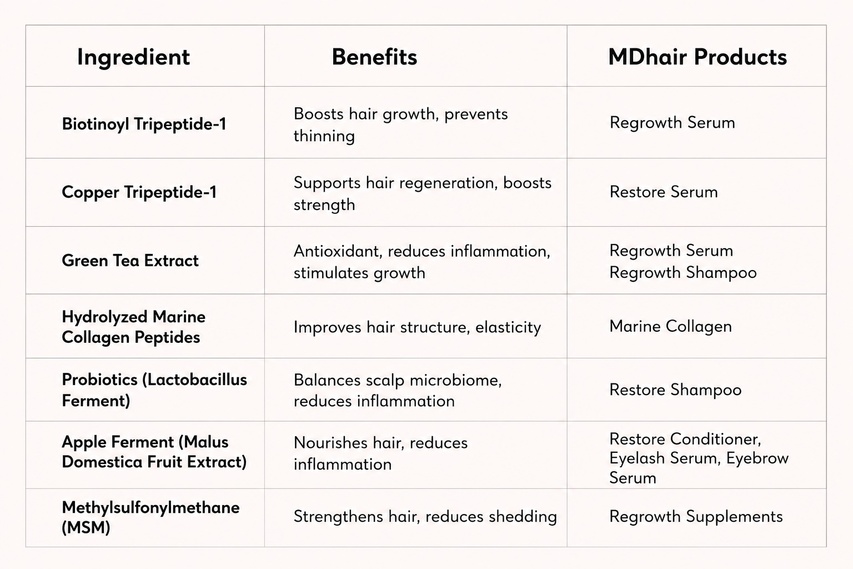
MDhair incorporates a blend of advanced ingredients that leverage epigenetic science to support healthy hair and combat the aging process. Key ingredients include active oligopeptides, which signal the follicles to produce stronger hair, and hydrolyzed marine collagen peptides, which provide essential amino acids that strengthen the hair structure. The inclusion of probiotics (Lactobacillus and apple ferment) helps balance the scalp microbiome, reducing inflammation and promoting a healthy environment for hair growth. Green tea extract (rich in EGCG) helps fight oxidative stress and supports follicular health, while MSM contributes sulfur, a building block for keratin, enhancing hair strength and vitality.
Conclusion: The Future of Anti-Aging Lies in Epigenetics
The field of epigenetics offers an exciting glimpse into the future of anti-aging haircare and skincare. By targeting the root causes of aging at the genetic level, ingredients like resveratrol, niacinamide, retinol, MSM, curcumin, EGCG, peptides, and probiotics can truly transform how our hair and skin age. These ingredients offer a powerful toolkit for turning off harmful genetic activity and promoting pathways that contribute to youthful, resilient skin.
When formulating or selecting anti-aging products, consider those that incorporate these epigenetically active ingredients. As research advances, we’ll continue to see more personalized and effective haircare and skincare solutions that go beyond the surface—literally rewriting the way our hair and skin age.
FAQs: Epigenetics and Anti-Aging in Hair & Skincare
Q. What is epigenetics, and how does it affect skin aging?
A. Epigenetics refers to changes in gene activity without altering the DNA sequence. Environmental factors and skincare ingredients can influence these changes, making skin age faster or slower. By targeting these mechanisms, certain products can help improve skin resilience and slow signs of aging.
Q. How does resveratrol help fight hair and skin aging?
A. Resveratrol influences sirtuin proteins, which protect cells from oxidative stress and inflammation. It promotes DNA repair and healthier gene expression, leading to firmer, more youthful-looking skin. Incorporating resveratrol-based products can help defend against environmental damage.
Q. Can niacinamide reverse signs of aging?
A. Yes, niacinamide supports DNA repair and enhances skin barrier function, helping reduce wrinkles and improve skin tone. It also increases ceramide production, which keeps skin hydrated and firm. Products like MDacne’s customized treatments often include niacinamide for its multi-functional benefits.
Q. Why is retinol considered so effective in anti-aging?
A. Retinol boosts skin cell turnover and collagen production while influencing epigenetic regulation of genes involved in skin renewal. This action reduces wrinkles and improves skin elasticity. Retinol-based products help rejuvenate the skin by promoting a smoother, more even complexion.
Q. What role does MSM play in hair and skin health?
A. MSM supports DNA methylation, a key epigenetic process that regulates skin elasticity and inflammation. It enhances collagen and keratin production, making both hair and skin stronger and more resilient. MDhair’s products often include MSM for its role in boosting hair and scalp health.
Q. How does curcumin benefit aging hair and skin?
A. Curcumin modulates epigenetic pathways that reduce inflammation and prevent collagen breakdown. This turmeric-derived ingredient helps protect skin from age-related damage and promotes an even skin tone. Products that contain curcumin can help slow skin aging and improve repair mechanisms.
Q. Can green tea extract help reverse signs of aging?
A. Yes, green tea extract, rich in EGCG, influences DNA methylation and reduces oxidative stress, both of which are linked to premature aging. It helps protect skin from UV damage and boosts collagen production. Many anti-aging haircare products, such as MDhair’s solutions, include green tea extract for its powerful epigenetic effects.
Q. How do peptides improve skin appearance?
A. Peptides trigger gene expression related to collagen synthesis by targeting microRNA, molecules that regulate skin aging. This helps improve skin elasticity and reduces the appearance of fine lines. Anti-aging serums containing peptides can effectively boost collagen levels, creating firmer skin.
Q. What is the benefit of using probiotics in skincare?
A. Probiotics influence epigenetic mechanisms that regulate inflammation and skin immunity. By balancing the skin microbiome, they reduce signs of aging like redness and sensitivity. Products containing topical probiotics, like those from MDacne, help enhance skin health and resilience.
Q. How does MDhair’s epigenetic approach support hair health?
A. MDhair products incorporate oligopeptides, MSM, probiotics, and green tea extract to target epigenetic pathways involved in hair growth and strength. These ingredients help signal follicles to produce stronger hair and create a balanced scalp environment. This advanced approach promotes healthier, more vibrant hair as it ages.
Ready to put epigenetic science to work for your hair and skin?
The ingredients above aren't just theory — they're built into the daily routines from MDhair and Nuvane. If hair aging is your focus, start with the MDhair Regrowth Serum, which delivers biotinoyl tripeptide, green tea, and follicle-stimulating botanicals straight to the scalp, and pair it with the MDhair Restore Shampoo, a blend of 20+ actives including probiotic Lactobacillus ferment, green tea, and rosemary that fights oxidative stress at the root. Round out the regimen with the MDhair Regrowth Supplements, customized with 20+ vitamins and plant complexes to strengthen hair from the inside out.
For skin that ages on your terms, reach for Nuvane's Biomimetic Retinol 0.3%, which pairs clinical-grade retinol with the SenoP3™ triple-peptide complex and niacinamide to boost collagen and cellular renewal. Add the antioxidant-powered Nuvane Vitamin C Serum to brighten, even tone, and defend against premature aging, and target expression lines with the peptide-rich Nuvane Advanced Firming Eye Cream.
Shop the full lineups at mdhair.co and nuvane.com to build your own epigenetically smart anti-aging routine.
References:
- Price, N. L., & Sinclair, D. A. (2014). Sirtuins and the Warburg Effect in Aging and Cancer. Nature Reviews. Molecular Cell Biology, 15(4), 225–234.
- Hwang, E., & Lee, T. H. (2019). Effects of Niacinamide on Skin Aging: Epigenetic Mechanisms and Applications. Journal of Dermatological Science, 94(1), 25-32.
- Kang, S., Fisher, G. J., & Voorhees, J. J. (2001). Photoaging and Topical Retinoids. Journal of the American Academy of Dermatology, 45(3), S72-S76.
- Lawrence, R. M., & McCarthy, C. M. (2010). The Role of Methylsulfonylmethane in Epigenetic Modifications for Skin Health. Journal of Cosmetic Dermatology, 9(4), 297-302.
- Park, J., & Kim, D. H. (2015). Curcumin and its Effects on Skin Health through Epigenetic Pathways. Experimental Dermatology, 24(5), 340-345.
- Katiyar, S. K., & Elmets, C. A. (2001). Green Tea Polyphenol Epigallocatechin-3-Gallate: Skin Photoprotection and Mechanisms of Action. Current Drug Targets. Immune, Endocrine & Metabolic Disorders, 1(3), 255-265.
- Lintner, K., & Peschard, O. (2000). Biologically Active Peptides: From a Laboratory Bench Curiosity to a Functional Skin Care Product. International Journal of Cosmetic Science, 22(3), 207-218.
- Kober, M. M., & Bowe, W. P. (2015). The Effect of Probiotics on Immune Regulation, Acne, and Photoaging. International Journal of Women's Dermatology, 1(2), 85-89.
Find the most effective hair growth products for you by taking the free hair assessment.
Enjoyed this article? Add MDhair as a preferred source on Google.