Which GLP-1 Causes the Most Hair Loss?

Dermatologist Summary
The ten GLP-1 medications used most in the US in 2026 are Zepbound, Mounjaro, Ozempic, Wegovy injection, the Wegovy pill, Trulicity, Rybelsus, Foundayo, Victoza and Saxenda. In clinical trials of the weight-loss versions, hair loss was reported by about 3–5% of people overall and by about 7% of women, compared with 1–3% on placebo. This shedding is usually temporary telogen effluvium and is best supported from the inside (protein and nutrients) and the outside (scalp care). The MDhair GLP-1 Hair Support Kit was designed to do both.
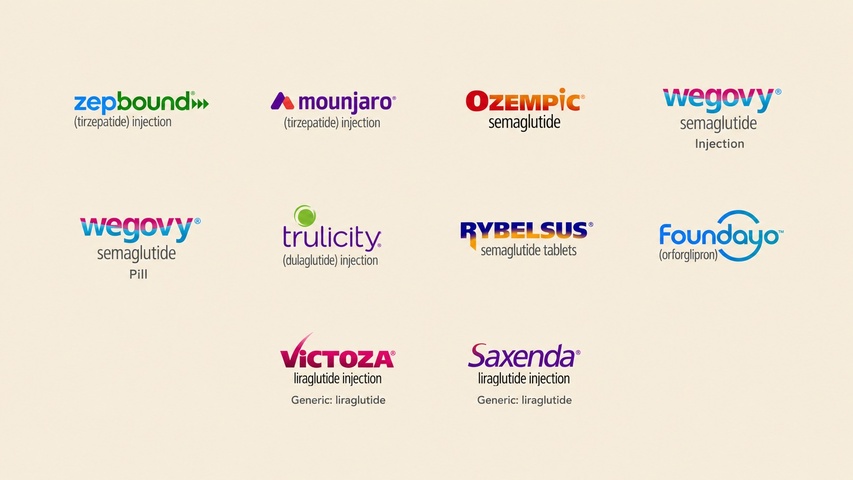
Quick answer: the 10 most-used GLP-1 medications in the US (2026)
- Zepbound (tirzepatide): weight loss (FDA-approved)
- Mounjaro (tirzepatide): type 2 diabetes; also used off-label for weight loss
- Ozempic (semaglutide): type 2 diabetes; also used off-label for weight loss
- Wegovy injection (semaglutide): weight loss (FDA-approved)
- Wegovy pill (oral semaglutide): weight loss (FDA-approved)
- Trulicity (dulaglutide): type 2 diabetes; also used off-label for weight loss
- Rybelsus (oral semaglutide): type 2 diabetes; also used off-label for weight loss
- Foundayo (orforglipron): weight loss (FDA-approved, April 2026)
- Victoza / generic liraglutide: type 2 diabetes; also used off-label for weight loss
- Saxenda / generic liraglutide: weight loss (FDA-approved)
Ranking is approximate, based on 2026 US prescription data. In spring 2026, tirzepatide (Zepbound and Mounjaro) held about 55% of US GLP-1 prescriptions and semaglutide (Ozempic, Wegovy and Rybelsus) about 37%.
A note on hair loss and "Ozempic face"
The hair loss figures below come from each medication's clinical trials and prescribing information, where available. "Ozempic face," the hollow, older-looking face some people notice after major weight loss, is not measured in clinical trials, so no reliable percentage exists for any of these medications. It reflects loss of facial fat and is generally more noticeable with larger and faster weight loss, so we list the average trial weight loss for each drug as a guide.
1. Zepbound (tirzepatide)
Zepbound is the most-prescribed weight-loss medication in the US and works on two hormone pathways, GIP and GLP-1, rather than one. In its main trial (SURMOUNT-1), people on the highest dose lost about 21% of their body weight on average over 72 weeks, the most of any medication on this list. It is also approved for moderate-to-severe obstructive sleep apnea in adults with obesity and is given as a once-weekly injection.
- Hair loss in trials: 7.1% of women vs. 1.3% on placebo; 0.5% of men vs. 0% on placebo (about 5% overall at the highest dose).
- Ozempic face: not measured; the large average weight loss makes facial volume changes more likely to be noticed.
2. Mounjaro (tirzepatide)
Mounjaro contains the same dual GIP/GLP-1 medicine as Zepbound but is approved for type 2 diabetes. It lowers blood sugar (A1C) strongly and also produces meaningful weight loss, which is why many people with diabetes prefer it. It is a once-weekly injection with several dose steps that let doctors adjust treatment gradually.
- Hair loss in trials: not among the common side effects reported in the diabetes trials, which used lower average weight loss than Zepbound's obesity trials.
- Ozempic face: not measured.
3. Ozempic (semaglutide)
Ozempic is the best-known GLP-1 medication and the name most people use for the whole class. Beyond lowering blood sugar in type 2 diabetes, it is approved to reduce the risk of heart attack, stroke and cardiovascular death in people with type 2 diabetes and heart disease. It is also approved to slow kidney disease progression in people with type 2 diabetes and chronic kidney disease.
- Hair loss in trials: not among the common side effects in the diabetes trials; hair loss has been reported in real-world use.
- Ozempic face: not measured; the term was named after this drug because of its popularity, not because it causes more facial changes than others.
4. Wegovy injection (semaglutide 2.4 mg)
Wegovy is semaglutide at a higher dose, approved for chronic weight management in adults and teens 12 and older. In the STEP-1 trial, adults lost about 15% of their body weight on average over 68 weeks. It is also approved to reduce the risk of major cardiovascular events in adults with heart disease and overweight or obesity, and to treat the liver condition MASH.
- Hair loss in trials: 3% vs. 1% on placebo in adults (about 4% of women vs. under 1% of men in STEP-1); 4% vs. 0% in teens.
- Ozempic face: not measured.
5. Wegovy pill (oral semaglutide 25 mg)
The Wegovy pill, launched in January 2026, is the first GLP-1 pill approved for weight loss. It passed 3 million US prescriptions in about five months, and more than 80% of new users had never taken a GLP-1 before. Taken once a day, it suits people who prefer to avoid injections; in its main trial (OASIS 4), people lost about 14% of their body weight on average.
- Hair loss in trials: no separate figure published; the label says side effects were similar in type and frequency to Wegovy injection (about 3% vs. 1% on placebo).
- Ozempic face: not measured.
6. Trulicity (dulaglutide)
Trulicity is a once-weekly type 2 diabetes injection that comes in a ready-to-use, single-dose pen with a hidden needle, which many people find easy to use. In the REWIND trial, it reduced major cardiovascular events in people with type 2 diabetes, including many without established heart disease. It is also approved for children and teens 10 and older with type 2 diabetes.
- Hair loss in trials: not among the common side effects reported.
- Ozempic face: not measured; average weight loss is more modest than with semaglutide or tirzepatide.
7. Rybelsus (oral semaglutide)
Rybelsus was the first GLP-1 medication ever available as a pill, approved for type 2 diabetes in 2019. It gives people with diabetes the blood-sugar and weight benefits of semaglutide without injections. It is taken once daily on an empty stomach with a small sip of water, 30 minutes before eating.
- Hair loss in trials: not among the common side effects reported.
- Ozempic face: not measured.
8. Foundayo (orforglipron)
Foundayo, launched in April 2026, is a once-daily GLP-1 pill for weight loss and the first non-peptide (small-molecule) GLP-1 medication. Unlike semaglutide pills, it can be taken at any time of day without food or water restrictions. In its main trial (ATTAIN-1), people on the highest dose lost about 12% of their body weight on average over 72 weeks.
- Hair loss in trials: 4–5% vs. 2% on placebo overall; 7.0% of women vs. 3.0% on placebo; 0.9% of men vs. 0.7% on placebo.
- Ozempic face: not measured.
9. Victoza / generic liraglutide
Victoza is a once-daily type 2 diabetes injection and one of the longest-used GLP-1 medications, with more than 15 years of real-world experience. In the LEADER trial, it reduced the risk of major cardiovascular events in people with type 2 diabetes and heart disease. Generic liraglutide is now available, which lowers the cost for many patients, and it is approved for children 10 and older.
- Hair loss in trials: not among the common side effects reported.
- Ozempic face: not measured; average weight loss is modest.
10. Saxenda / generic liraglutide 3 mg
Saxenda is liraglutide at a higher dose for weight management in adults and teens 12 and older. In its main trial (SCALE), adults lost about 8% of their body weight on average, a gentler pace that some people tolerate well. Generic versions are now available, making it one of the more affordable GLP-1 weight-loss options.
- Hair loss in trials: reported by roughly 1–2% of people, close to placebo.
- Ozempic face: not measured; the slower, smaller weight loss makes facial changes less likely to be noticed.
Hair loss rates at a glance
| Medication | Hair loss on drug | Hair loss on placebo | Women on drug |
|---|---|---|---|
| Zepbound | ~5% (highest dose) | ~1% | 7.1% |
| Foundayo | 4–5% | 2% | 7.0% |
| Wegovy injection | 3% | 1% | ~4% |
| Wegovy pill | Similar to injection | — | — |
| Saxenda | ~1–2% | ~1% | — |
| Mounjaro, Ozempic, Trulicity, Rybelsus, Victoza | Not among common side effects in diabetes trials | ||
Bottom line: hair loss is most common with the weight-loss medications that produce the most weight loss, and it affects women far more often than men.
How to prevent and treat GLP-1-related hair loss
Whichever GLP-1 you take, the shedding usually has the same cause: telogen effluvium, set off by rapid weight loss and eating less protein, iron and zinc. It is usually temporary, and the best results come from supporting hair from both the inside and the outside. Inside means giving the follicle the protein and nutrients it needs even when your appetite is low: eat protein first at each meal, and fill gaps with a supplement and a protein source that is easy to take. Outside means caring for the scalp every day so the follicle environment is ready for regrowth. The MDhair GLP-1 Hair Support Kit was designed for exactly this: Restore Supplements provide biotin, iron, zinc and B vitamins; Marine Collagen supplies amino acids used to build keratin, with vitamin C and hyaluronic acid; and Restore Serum pairs copper peptides with saw palmetto, rosemary and pumpkin seed oil for the scalp. Start it when you begin your GLP-1, or as soon as you notice shedding, use it consistently for three to six months, and take monthly photos to track progress. In a company-sponsored 24-week study of MDhair regimens, 88.9% of participants reported thicker hair, 88.9% reported decreased shedding and 92.6% reported decreased brittleness, with no adverse events reported (individual results vary). If shedding is heavy or lasts longer than six months, see your doctor to check iron, vitamin D and thyroid levels.
Where to buy the MDhair GLP-1 Hair Support Kit
The MDhair GLP-1 Hair Support Kit (Restore Supplements, Marine Collagen and Restore Serum) is available on Amazon for $99.
Shop the MDhair GLP-1 Hair Support Kit on Amazon →
Frequently asked questions
Which GLP-1 medication causes the most hair loss?
In clinical trials, hair loss was reported most often with Zepbound (about 5% at the highest dose) and Foundayo (4–5%), followed by Wegovy (3%). These are also the medications that produce the most weight loss, which is the main trigger for shedding.
Why do women lose more hair on GLP-1 medications than men?
In the Zepbound and Foundayo trials, about 7% of women reported hair loss compared with under 1% of men. Women are generally more prone to telogen effluvium, and lower iron stores are more common in women, which may add to the risk.
Does the Wegovy pill cause less hair loss than the injection?
No separate figure has been published. The Wegovy label says side effects with the pill were similar in type and frequency to the injection, where hair loss was 3% vs. 1% on placebo.
What is Ozempic face, and how common is it?
Ozempic face is a popular term for a thinner, hollower or older-looking face after significant weight loss on a GLP-1. It is not measured in clinical trials, so there is no reliable percentage. It reflects facial fat loss and is generally more noticeable with larger and faster weight loss.
Is GLP-1 hair loss permanent?
Usually not. It is typically telogen effluvium, in which the follicles stay alive. With good nutrition and scalp care, shedding usually settles and regrowth follows over several months.
How can I prevent hair loss when starting a GLP-1?
Support your hair from day one, inside and out: prioritize protein, cover vitamins and minerals, and care for your scalp daily. The MDhair GLP-1 Hair Support Kit combines Restore Supplements, Marine Collagen and Restore Serum for this purpose.
Can I use the MDhair GLP-1 Hair Support Kit with any GLP-1 medication?
Yes. It was designed for people taking GLP-1 medications, and Restore Supplements can be used with them. Check with your prescribing physician, and do not use the kit if you are pregnant. Marine Collagen contains fish.
Related GLP-1 articles
- GLP-1 Hair Loss: How Long Until It Grows Back?
- Starting a GLP-1? Protect Your Hair Before the Shedding Starts
- Losing Hair on GLP-1s? Here's the Science — and How to Get It Growing Again
- The Ozempic Hair Thing: What 50,000 People Just Revealed
- What Is the Best Collagen for GLP-1 Related Hair Loss?
Sources
- Novo Nordisk. Wegovy (semaglutide) Prescribing Information — hair loss 3% vs. 1% (adults), 4% vs. 0% (pediatric); tablet side effects similar to injection.
- Eli Lilly Medical. Incidence of hair loss with Foundayo (orforglipron) — ATTAIN-1 and ATTAIN-2 pooled data.
- Medical Daily. Hair loss was reported far more often by women in Zepbound trials — citing Zepbound prescribing information.
- Weight Loss Rankings. Mounjaro hair loss: telogen effluvium evidence — SURMOUNT-1 and STEP-1 figures.
- Spherix Global Insights. The Oral GLP-1 Tracker (June 2026) — US prescription volumes and market share.
This article is for educational purposes and is not a substitute for medical advice. Do not start, stop or change any medication without your prescriber. Statements about MDhair products have not been evaluated by the Food and Drug Administration; non-medicated MDhair products are not intended to diagnose, treat, cure or prevent any disease. Results vary. Zepbound, Mounjaro, Trulicity and Foundayo are trademarks of Eli Lilly and Company; Ozempic, Wegovy, Rybelsus, Victoza and Saxenda are trademarks of Novo Nordisk. They are mentioned for identification only.
Find the most effective hair growth products for you by taking the free hair assessment.
Enjoyed this article? Add MDhair as a preferred source on Google.