Hair loss treatments for men in 2026: what actually works

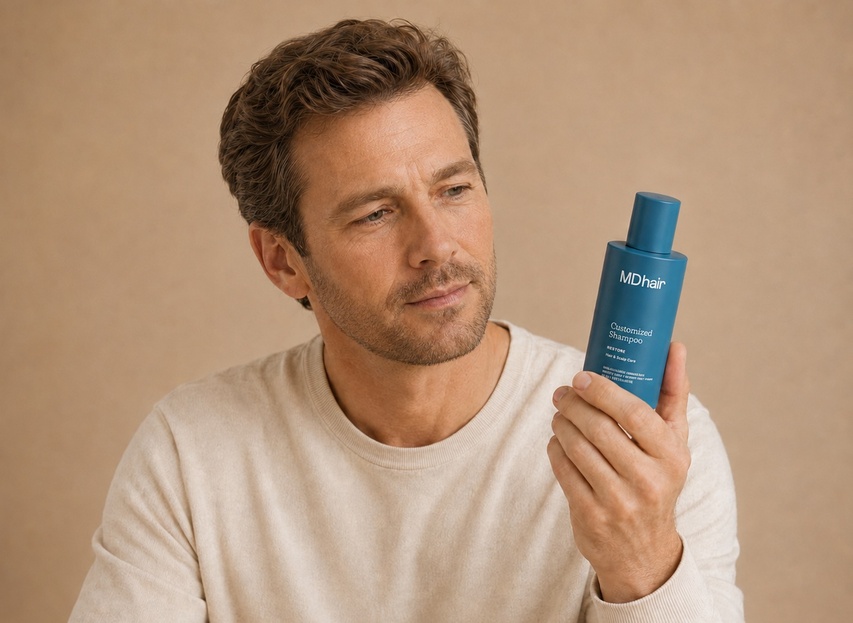
Roughly half of men are dealing with some degree of androgenetic alopecia by age 50, and it's worth being clear up front that this is genetics at work, not bad luck. A hormone called DHT is the driver, gradually shrinking hair follicles until they stop producing visible hair. The scale of the problem explains why the market is so crowded, with pills, serums, lasers, and procedures all claiming to fix it, though most of them only work a little and just a handful work a lot. Which one actually makes sense for a given guy depends almost entirely on how far along his hair loss already is.
I've spent most of my career as a dermatologist thinking about exactly this kind of question, and my interest has never been whether an ingredient sounds promising. It's what the actual trial data says happens to real scalps. This list ranks the options men are most likely to be considering in 2026 by the strength of that evidence, and maps each one to the stage of hair loss where it tends to make the most sense, since a man with a slightly receding hairline and a man with a bare crown aren't candidates for the same first move. Treating them as if they were is where a lot of hair-loss advice goes wrong.
One quick note on staging before diving in. Dermatologists describe male pattern hair loss using something called the Hamilton-Norwood scale. Stage I on that scale means no noticeable loss at all. Stage VII is the other end of it, where only a horseshoe of hair remains at the sides and back. Most men land somewhere in between, so for practical purposes it helps to think in three broad zones rather than seven precise stages. Early thinning or a receding hairline usually sits around Norwood II to III. A visibly thinning crown or an advancing hairline is a step further along, closer to III vertex through IV. And more extensive loss, where large areas of scalp are already bare, starts around stage V and continues from there. I'll flag where each treatment fits along that spectrum as we go.
1. Topical Minoxidil: The OTC Baseline Nearly Everyone Should Know
Minoxidil has been sitting on pharmacy shelves without a prescription since the late 1980s, making it the longest-standing option on this list by a wide margin. It's also still the only topical drug the FDA has approved for treating male pattern hair loss. The way it works is fairly simple. Minoxidil extends the growth phase of the hair follicle, which gives thinning follicles more of a chance to keep producing visible hair rather than shutting down. It also increases blood flow to the scalp, which appears to support that same process. Men typically use it at 5% concentration, about double the strength approved for women.
It suits nearly every stage of hair loss, though the evidence is strongest for early-to-moderate thinning rather than large bald patches. That's because minoxidil can only support follicles that are still miniaturizing. It doesn't wake up follicles that have already gone fully dormant. Cost isn't much of a barrier, at least. A twice-daily foam or solution is one of the cheaper entries on this list, and MDhair's own 5% version runs $24. Patience is the real trade-off here. Most men need three to six months before seeing a meaningful difference, and shedding often gets slightly worse in the first few weeks as the hair cycle resets. That initial shed catches a lot of first-time users off guard, enough that some quit right before the drug would have started working.
2. Finasteride: The Prescription Option With the Deepest Trial History
A pair of placebo-controlled trials followed more than 1,500 men on finasteride 1 mg daily and found clinically significant increases in hair count, improvement that held up, and in many cases kept building, through a second year of continued use in extension studies. That's a longer and larger evidence base than almost anything else on this list.
What sets finasteride apart from minoxidil is where it intervenes. Rather than supporting follicles from the outside, it works by blocking the enzyme that converts testosterone into DHT, going after the hormonal driver of the condition rather than just propping up the follicles already affected by it. That makes it a strong fit for men in the early-to-moderate range, often paired with minoxidil rather than used in place of it, though it isn't free of trade-offs. It requires a prescription, and a minority of men report sexual side effects such as reduced libido, with large trials putting that figure at under 4% and finding the effects reversed after stopping treatment. Men considering it should raise it with a doctor rather than a hair-loss forum, since this is the one option on this list where the conversation genuinely needs a clinician's judgment.
3. Dutasteride: A More Aggressive Off-Label Alternative
Dutasteride has never been approved by the FDA for hair loss in the United States. Its official approval is for prostate enlargement instead. Any use for balding, then, runs through the off-label, prescription-only route rather than a labeled indication. That regulatory gap doesn't stop some dermatologists from reaching for it anyway. The reasoning comes down to mechanism: dutasteride blocks both major forms of the 5-alpha-reductase enzyme, while finasteride blocks only one. Doctors sometimes turn to the broader-acting drug specifically in men whose hair loss hasn't responded well to finasteride alone.
That broader block can succeed where the narrower one didn't. It comes at a cost worth weighing, though. A stronger, longer-lasting hormonal effect also means a longer washout period if side effects show up, which is part of why dutasteride for hair loss tends to get reserved for moderate-to-advanced cases, and only once a doctor has judged the added potency worth the trade-off. This isn't a decision to make off an online recommendation. It belongs in a doctor's office.
4. DHT-Blocking Serums and Natural Extracts
Saw palmetto extract has the clearest mechanistic case of the plant-derived DHT blockers. Laboratory studies show it measurably inhibits 5-alpha-reductase activity, the same enzyme finasteride and dutasteride target directly. The human trial evidence tells a different story, though. It's thinner and less consistent than what exists for either prescription drug. Pumpkin seed oil, rosemary extract, and green tea catechins land in a similar place overall. The underlying biology is plausible for each of them, but the human research is small and scattered, and none of it comes close to the trial depth behind the prescription options above.
These ingredients tend to work best as a supporting layer rather than a primary treatment, which is exactly how MDhair uses them: its Regrowth Serum combines DHT-blocking actives with other scalp-supporting ingredients as a topical add-on to a broader regimen, priced at $44. Men in the earliest stage of thinning, before hair loss is visually obvious to others, are the best candidates for leaning on this category as a first move, since the milder mechanism is a better match for milder loss.
5. Low-Level Laser Therapy: A Reasonable Add-On, Not a Standalone Fix
An FDA-cleared laser comb produced a statistically significant increase in terminal hair density compared with a fake device, across four separate randomized, sham-controlled trials, with no serious adverse events turning up in any of the roughly 250 men and women enrolled. That's a genuinely positive result on its own, though it's worth tempering with a second finding: a separate 16-week trial comparing laser therapy plus minoxidil against minoxidil used alone found no significant additional benefit from adding the laser, a useful reality check against treating it as an automatic multiplier on top of whatever else a man is doing.
Consistency seems to matter more than the device itself. A large real-world study followed more than 1,300 users and found effectiveness climbing toward 80%, but only after roughly nine to ten months of regular sessions rather than a few weeks of casual use. Given that timeline, it's a reasonable layer for men already on minoxidil or finasteride who want another angle, at a device cost that typically runs into the hundreds of dollars, rather than something to try in isolation expecting it to replace a proven drug.
6. Ketoconazole Shampoo: A Small, Legitimate Scalp-Health Assist
Ketoconazole is technically an antifungal, not a hair-loss drug. Older comparative studies found it still produces modest improvements in hair density on its own, though. The likely explanation is some direct anti-androgen activity at the follicle level, separate from whatever it's doing to fungus. That effect falls well short of what finasteride or minoxidil achieve. It's a real effect, though, not a cosmetic one.
Its more useful role for most men is as a scalp-health supplement to whatever else they're doing, since seborrheic dermatitis and excess scalp oil are common irritants that can worsen how thinning hair looks, and a medicated shampoo used a few times a week addresses that layer without adding much cost or effort. It fits at any stage of hair loss, and it's one of the few items on this list a man could reasonably add without consulting anyone first.
7. Microneedling: The At-Home Procedure With Surprisingly Solid Numbers
A pilot study out of India put men on either weekly microneedling plus twice-daily minoxidil, or minoxidil alone, and after twelve weeks the microneedling group's hair count had risen by roughly four times as much as the minoxidil-only group's: 91 additional hairs per square centimeter versus 22. That's a striking gap for a fairly low-tech intervention, and it isn't a fluke result either. A more recent meta-analysis pooled eleven separate randomized trials and confirmed a significant advantage for the combination over minoxidil by itself, even though the individual studies varied in needle depth and session frequency.
The mechanism is thought to involve growth-factor activation at the follicle, plus improved absorption of topical treatments through the tiny channels the needling creates. This is best positioned as a booster for men already committed to minoxidil rather than something to try alone, particularly once hair loss has plateaued on minoxidil by itself and a bigger nudge seems necessary. A basic dermaroller costs relatively little, though how well it works depends a great deal on technique and depth, an area where a dermatologist or ongoing support relationship tends to help.
8. Platelet-Rich Plasma (PRP): Promising, but Protocol-Dependent
PRP starts with a man's own blood. The platelets get concentrated out of it, and that concentrate gets injected back into the scalp to stimulate follicles with the growth factors platelets naturally release. Multiple small trials have reported improved hair density and thickness after a course of sessions, usually spaced a month or so apart over several months.
The honest caveat is that protocols vary enormously from clinic to clinic. Preparation method, injection depth, and session spacing aren't standardized the way a drug's dosing is, which makes it genuinely hard to say that any two men getting "PRP" are getting comparable treatment. It tends to make the most sense for moderate hair loss in men who want an in-office procedure without committing to surgery. Cost adds up quickly compared with a daily pill or topical, typically running several hundred dollars per session with multiple sessions needed.
9. Hair Transplant Surgery: The Permanent Option, With Real Trade-Offs
Modern follicular unit extraction moves individual hair follicles from a donor area, usually the back or sides of the scalp where hair is genetically resistant to balding, into the areas that are thinning or bald, and unlike every other option on this list, the result is permanent rather than something that requires ongoing maintenance. That same permanence is what limits who's a good candidate, since the procedure needs a healthy donor area to draw from and does nothing for hair that's still present but thinning, which is why it's squarely a procedure for more advanced hair loss rather than an early move.
Cost varies widely, typically running from several thousand dollars into the tens of thousands. Graft count, technique, and geography all factor into where a given case lands on that range. Recovery takes real time as well. Transplanted hair actually sheds before it regrows over the following months, a detail that surprises some patients expecting immediate results. There's one more thing surgeons tend to recommend: pairing a transplant with ongoing medical therapy like finasteride or minoxidil afterward. Surgery relocates existing follicles. It doesn't do anything, on its own, to slow the loss of the hair a man still has.
10. Personalized, AI-Matched Regimens: Where a Combined Approach Fits
A short quiz plus a scalp photo is the starting point for MDhair's approach, feeding an AI-driven assessment that identifies the likely underlying driver of a man's hair loss and matches him to a kit built around it, medicated 5% minoxidil combined with topical DHT-blocking serums, supplements, and scalp-focused shampoos, rather than asking him to assemble that stack himself from a dozen different sources. That combination approach reflects the practical challenge most men run into once they've read a list like this one: figuring out which two or three treatments to combine, and adjusting that combination as things change, is a harder problem than picking a single product off a shelf.
The system's case for this rests on real clinical data rather than marketing claims alone. An independent, third-party study ran for six months under IRB approval. Compared with the leading hair-loss supplement brand, it found roughly 2.8 times the improvement in hair growth. Hair quality improved by about 3.0 times over that same comparison. Microscopy from the same study told a similar story: damaged hair cuticles moved from a cracked, lifted state back to a healthy, intact one over those six months. On the practical side, kits span $66 for the essential tier up to $156 for the most comprehensive option. Unlimited dermatologist chat support runs throughout as well, keeping a real clinician in the loop on adjustments without the cost or scheduling friction of an in-person visit every time something needs tweaking.
Matching Treatment to Stage
The throughline of this whole list is really about matching the intensity of the treatment to the stage of the hair loss, rather than reaching for the newest or most aggressive option regardless of how far things have actually progressed. Early, subtle thinning tends to respond well to the gentler layer first. That means minoxidil, maybe a DHT-blocking serum, maybe a medicated shampoo, before reaching for anything more aggressive. Once thinning is more established, a few more tools earn their place. Finasteride, microneedling, and low-level laser all work best as add-ons to that foundation rather than replacements for it. More advanced, extensive loss changes the conversation again. That's where dutasteride, PRP, and eventually surgical transplantation become the realistic options, usually alongside continued medical therapy to protect whatever hair remains.
None of this amounts to a guarantee. Hair biology varies enough between individuals that even the best-studied treatments don't work identically for every man. Anyone managing a broader medical condition should loop a doctor in before starting something new, and the same goes for anyone who notices scalp irritation once they do.
It's also worth being precise about what's actually regulated here, since the line is easy to blur. Minoxidil holds real FDA drug status, but that status covers one specific use, not the whole category. Everything else on this list, the DHT-blocking serums, the shampoos, the supplements, lives in different territory entirely. These are cosmetic and supplement products, which means the FDA hasn't evaluated them the way it evaluates an approved drug. None of them are intended to diagnose, treat, cure, or prevent any disease.
The evidence base for treating male pattern hair loss is genuinely stronger than it was a decade ago, and stacking the right combination of proven approaches, rather than chasing whatever's newest, is still the closest thing to a reliable answer this field has.
Dr. Yoram Harth is a board-certified dermatologist and Co-Founder and Chief Medical Officer of MDalgorithms Inc., the company behind MDhair and MDacne. A magna cum laude graduate of Tel Aviv University's Sackler School of Medicine, he trained in dermatology at Rambam Medical Center and completed a research fellowship at Columbia-Presbyterian Medical Center in New York. His work spans phototherapy, photodynamic therapy, and AI-personalized skin and hair care.
Sources:
1. Kaufman KD, et al. Finasteride in the treatment of men with androgenetic alopecia. J Am Acad Dermatol. 1998. PMID: 9777765.
2. McClellan KJ, Markham A. Finasteride: a review of its use in male pattern hair loss. Drugs. 1999;57(1):111-126. doi:10.2165/00003495-199957010-00014.
3. Roberts JL, et al. Efficacy and safety of a low-level laser device (HairMax Lasercomb) in male and female pattern hair loss: a multicenter, randomized, sham device-controlled, double-blind study. Am J Clin Dermatol. 2014;15(2):115-127. doi:10.1007/s40257-013-0060-6.
4. Dhurat R, et al. A randomized evaluator blinded study of effect of microneedling in androgenetic alopecia: a pilot study. Int J Trichology. 2013;5(1):6-11. doi:10.4103/0974-7753.114700.
5. Adistri K, et al. Effectiveness and safety of the combination therapy of micro-needling and minoxidil in androgenetic alopecia of Indonesian men: a randomized controlled trial. Dermatol Rep. 2024. doi:10.4081/dr.2024.9945.
6. Bhardwaj V, Rodgers N, Harth O, Harth Y. Artificial Intelligence-Based Personalization of Treatment Regimen for Hair Loss: A 6-Month Clinical Trial. J Drugs Dermatol. 2025;24(3):233-238. doi:10.36849/JDD.8611.
Find the most effective hair growth products for you by taking the free hair assessment.
Enjoyed this article? Add MDhair as a preferred source on Google.